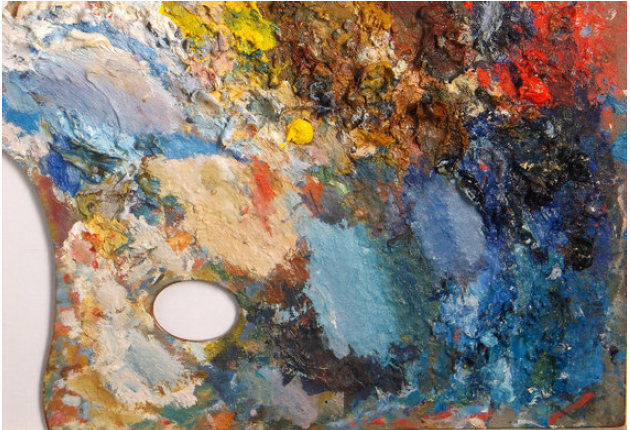
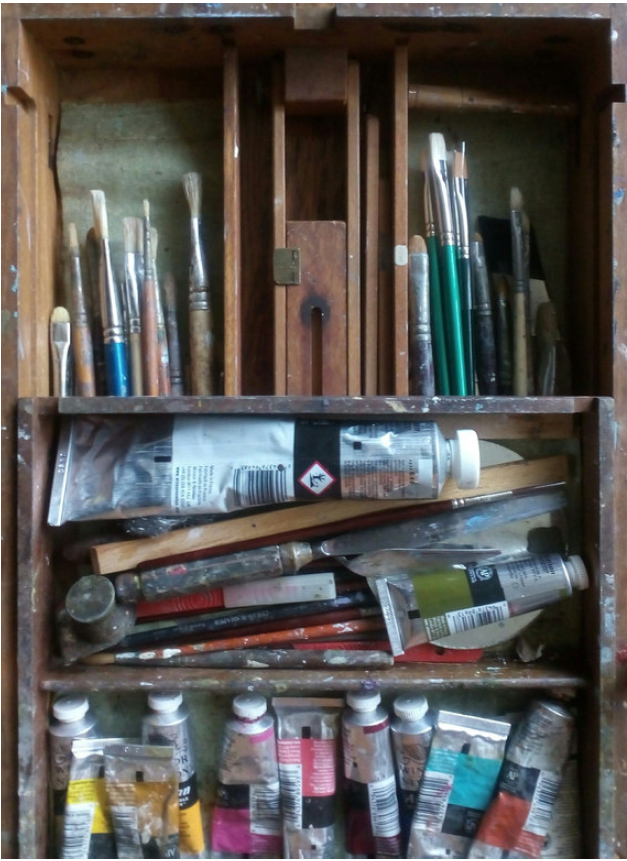
GLANVILLE RETROSPECTIVE
DRAWINGS, PAINTINGS, PRINTS, CERAMICS 1950 - 2020
Over more than 50 years that I have been painting, the world has changed. Digital photography has opened a wonderful new path to observing the natural world. Astonishing lenses, time lapse and stabilising equipment have revealed visions of life the human eye alone could not register. At the same time, these developments have appeared to devalue the still image as it has become submerged into the scrolling movements through randomised moments captured on millions of mobile phones; each individually frozen in time and entirely lacking in life.
Behind each digital image a finger tapped the glass and, as a perceptive photographer pointed out “a moment was stolen” as a nascent vision was handed to a device.
In contrast, a painting is hard won. The first action of a representational painter is to stop and look. If, as not all painters are, they are moved to work from observation, however far removed from the first impression the painting may become, the painter will
rediscover himself as a still point in a moving world. This is the mystery behind the notion of ‘still life’ as a subject. Cezanne’s work bears witness to the fact that in the eye of an artist an apparently inanimate object will not remain static if it is observed intensely over time, and in the way that he took this approach into the landscape he stands as a unique figure. Science now concurs with the mystery.
To stop and look is an act which itself produces a new impulse: to give more time towards an even closer examination of what is seen. The way this comes about, the connections developed between the eye and the hand, the brush and the surface on which the image emerges, is a process in normal human time, subject to variability inside and outside, and all but vanished since the ‘instant’ has over-ridden the ‘eternal now’. The risks are obvious, and a completed painting is a record of the effort to sustain attention. This involves letting the hand follow through its own sensitivity the image being received through the eye, passing as it does so, an area of feeling at the centre of the painter. It’s a fine balance and a fine art to pursue.
When anyone looks at a painting, representational or not, they are not looking at an electronic reduction of a wider world, but at a physical object which inherently reflects the world we are in and the tempos of another human life. The artist’s methods and techniques are secondary to this potential communication, which itself may be described as an almost lost art.
CG. January 2024